

Research findings support the need for a non-alerting light like Lumie Willow for children at bedtime
Research published in the academic journal Physiological Reports shows that pre-school children are particularly sensitive to the stimulating effect of evening bright light. The findings support the need to use non-alerting lights like Lumie Willow at children’s bedtime.
In a paper published in 2018, researchers from the University of Colorado, USA, measured melatonin levels in a group of 10 children aged 3-5. The children followed a regular sleep schedule for five days. On the sixth day the children spent the day in a dim light environment and researchers measured the resulting melatonin levels. On day seven, an hour before bedtime, the pre-schoolers were exposed to bright light for an hour before having their melatonin levels measured. Bright light exposure suppressed melatonin by almost 90 percent, and even 50 minutes after the light was gone, most of the children were still not back to 50 percent of the melatonin levels seen the day before.
While previous research has shown that our body clock is very sensitive to bright light exposure, this was the first time the effect was studied in pre-school children. It seems young children are more sensitive than adults to light exposure as their lenses are a lot clearer and their pupils larger, which combine to allow more light to hit the retina and therefore create a stronger signal to the body clock. The research group has subsequently built on this initial experiment with a longer, larger study, looking at different light intensities and how they affect children’s body clocks.
"About 30 percent of young children experience some type of evening sleep disturbance so parents should avoid exposing their children to bright light and then immediately transitioning to darkness at bedtime. We need to understand the effects of bright lights on children and how they can affect sleep; sleep problems that develop early in childhood can persist later in life and have a multitude of negative consequences." Dr Lameese D. Akacem, University of Colorado, USA.
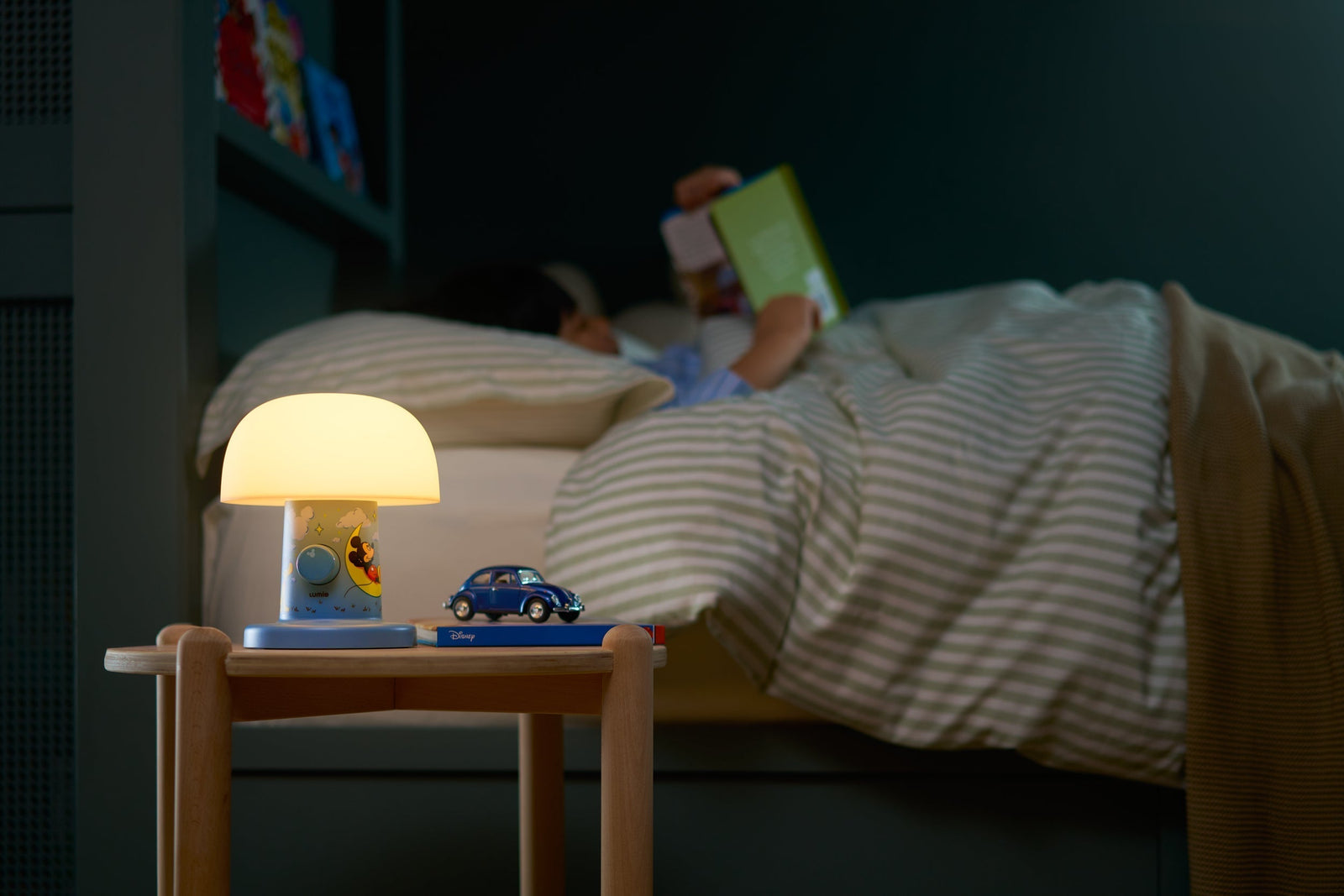
This research supports the key premise for Lumie Willow, a calming bedtime lamp for children and babies. Unlike other nursery lights, Willow uses low-blue light LEDs. It is the ‘blue’ part of the light spectrum that is alerting because it stimulates our brains to produce get-up-and-go hormones like cortisol and suppresses the sleep hormone melatonin. By significantly reducing the blue component of the light it emits, Willow helps to create a low-stimulation environment to help your child feel ready for sleep.
Willow is designed for use throughout the bedtime routine. Its fully adjustable low-blue light allows for a level of brightness that’s comfortable for use while reading bedtime stories without stimulating your child. Its 20-minute sunset feature can then be activated with a click of a button, creating a gradual transition to night that can either fade to off or to a reassuring, orange nightlight. The light control is smooth and silent so you can easily check on your child without disturbing them.
Available in three timeless Disney designs, perfect for the modern nursery, Willow is a must-have for the little one’s bedroom, suitable from birth and with them as they grow.
References: