


Frequently Asked Questions
Wake-up lights
How do Lumie Bodyclock wake-up lights work?
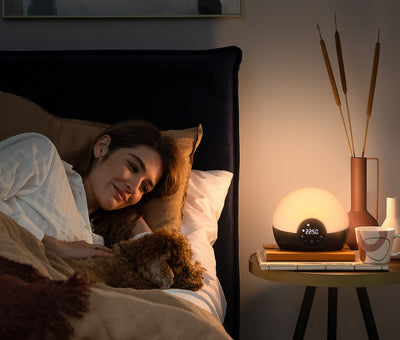
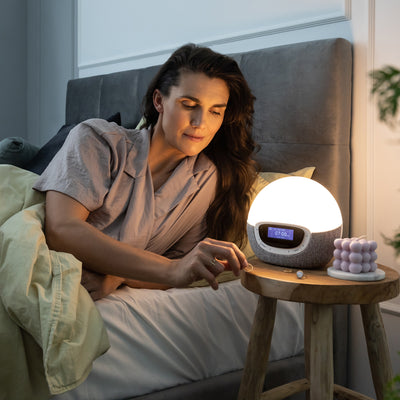
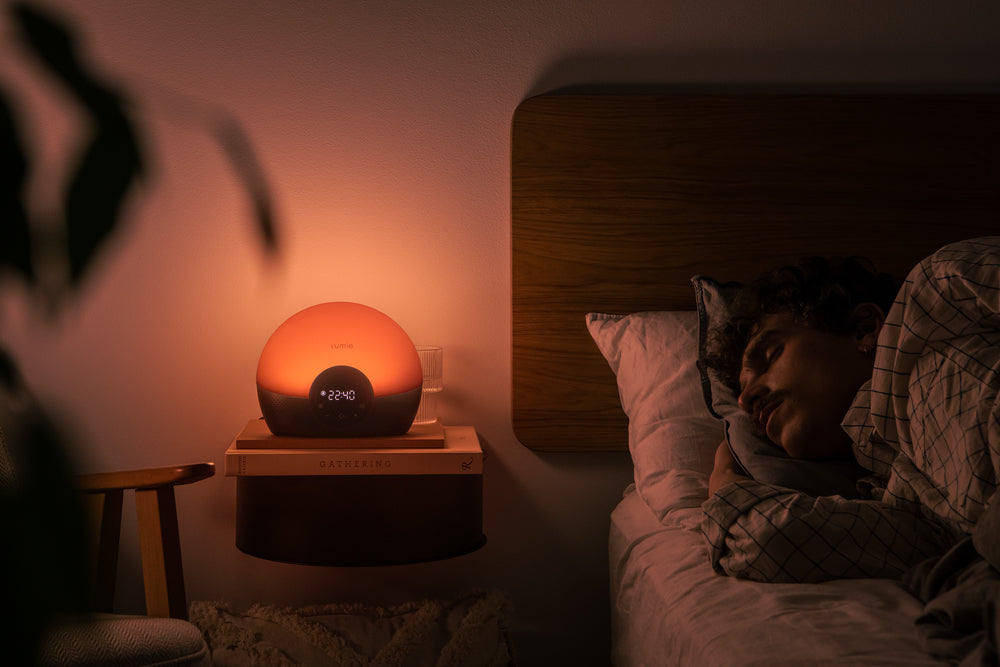
Lumie Bodyclock wake-up lights use a gradual increase in light intensity along with smooth colour changes from red, orange to warm-white to simulate a natural sunrise. This gentle transition helps regulate your body's internal clock naturally and encourages a more peaceful waking experience, ensuring you feel rested, refreshed, and ready to tackle your to-do list.
What is lux?
Lux is a measure of the intensity of visible light received by the subject at a given point. Since light is brightest and strongest at its source and becomes less intense with distance, the lux level stated for any lightbox is only meaningful if it also says at what distance.
Lumie Brazil, our most powerful lightbox easily provides 10,000 lux at 35cm. Due to the smaller surface area of more compact lights, you need to have them closer to receive 10,000 lux. If this is not practical or comfortable, you can simply use them for longer instead.
How many lux is the Bodyclock range?
The importance of the Bodyclock range is the gradual sunrise and sunset feature, mimicking a natural sunlight to help you to feel more energised and more refreshed. We do not tend to measure Bodyclock in lux as this is unrealistic due to the distance you would need to sit from the unit. Our Bodyclock range measured in Lumens would be around 350.
Bright light therapy lamps
What is lux?
Lux is a measure of the intensity of visible light received by the subject at a given point. Since light is brightest and strongest at its source and becomes less intense with distance, the lux level stated for any lightbox is only meaningful if it also says at what distance.
Lumie Brazil, our most powerful lightbox easily provides 10,000 lux at 35cm. Due to the smaller surface area of more compact lights, you need to have them closer to receive 10,000 lux. If this is not practical or comfortable, you can simply use them for longer instead.
At what time of day should you use bright light therapy?
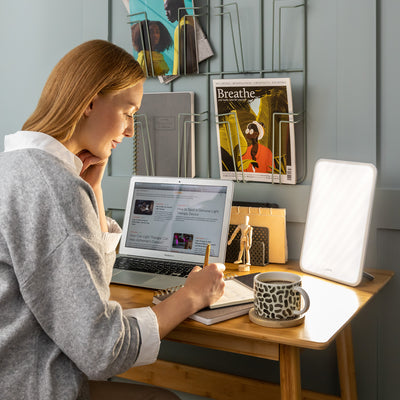
If you're using a bright light therapy lamp such as Lumie Task or Vitamin L to help with the winter blues, bright light in the morning is most effective so try that first. For some people, early evening light exposure is beneficial. If you find it difficult to get going in the morning, switch on your bright light therapy lamp as soon as you can. If you don't have much time in the morning, then you should aim for a top-up or full session in the afternoon. If you tend to feel sleepy or fall asleep too early, use your bright light therapy lamp in the late afternoon/early evening. It's best to avoid bright light too close to bedtime - within about three hours - as you may find it difficult to get to sleep.
When in the year should you start to use bright light therapy for winter blues?
Look out for early signs of winter blues in Sept/Oct and if you start feeling more tired, anxious or irritable, start using a bright light therapy lamp such as Lumie Task or Vitamin L. As spring comes around, you can cut back on your bright light sessions. If symptoms return, use your bright light therapy lamp again for a few days.
How long does it take to feel the effects of a light therapy lamp?
You should expect to feel the benefits within the first 1-2 weeks of using the light. We offer a 45-day trial with our products so this should be long enough to determine whether you are going to experience the benefits of light therapy.
Can children use light therapy?
We do not recommend children under the age of 7 to use our bright light therapy lamps as their eyes are still developing. However, our wake-up lights and Lumie Bedbug would be suitable for any age, including babies and young children.
Children's lights (Willow)
Is it easy to use?
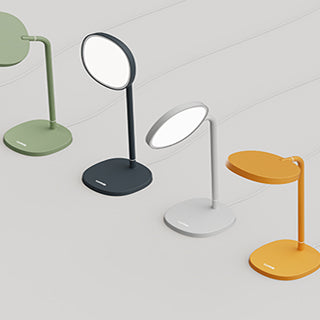
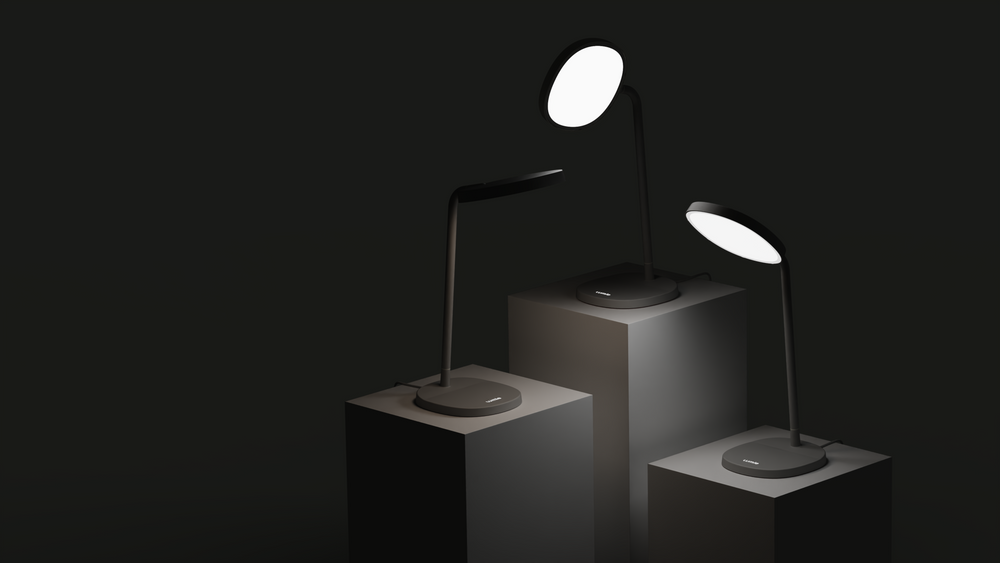
Yes, Willow is easy to use and works straight out of the box. The brightness dial on the front of the lamp can be used to adjust the brightness and use it as a bedside light. A short press of the sleep button will start the 20-minute sunset sequence. The light will flicker to confirm, and a long press will cancel it. Turn the nightlight switch on to finish the sunset with a constant gentle glow through the night, or off to fade completely off at the end of the sunset sequence.
Why is red light better for sleep than a normal nightlight?
Most nightlights emit white or blue-toned light, which can suppress melatonin, the hormone that makes us feel sleepy, and signals 'daytime' to your child's brain. Warmer light emits red and orange wavelengths and is less likely to interfere with the body's natural sleep processes (Bathory & Tomopoulos, Curr Opin Pediatr, 2017). Willow emits warm light at 2700K, within the range shown not to interfere with melatonin production.
Does blue light from screens undo how the lamp works?
It can. Sleep research has shown that young children are significantly more sensitive to light than adults, which is why choosing the correct bedtime lamp can make all the difference to bedtime routines. Blue light, commonly found in digital displays (such as mobile phone and tablet screens) and bright household lighting, can supress the sleep hormone melatonin (Akacem et al., Physiol Rep, 2018).
Can I use it for naps as well as nighttime?
Yes, Willow's sunset sequence works equally well for putting your child down for naps. In fact, it's particularly useful during summer months or when travelling away from home, when routines might be out of sync and daytime sleep can be harder to initiate.
Does it make noise?
Willow is completely silent, allowing you to adjust the light during the night with minimal disturbance. We have not included additional functionality at this time, but you can use Willow in conjunction with an audio player if you wish.
Does it need to stay plugged in and is it safe around young children?
Yes, Willow plugs into a standard mains socket via the included power adaptor. The lamp does not have a battery or wireless option, so you'll want to ensure the socket is easily accessible. As with any mains-powered product, the cable should be kept away from young children and never allowed near their neck - please refer to the safety guidance included with your lamp.
Does it get hot if left on overnight?
Willow does get warm during use but has been comprehensively tested to remain at a safe temperature even after sustained use. The LEDs are also built to last for many years of several hours' use a day, so leaving the nightlight on all night won't affect its longevity.
Does it emit EMF (electromagnetic fields)?
Willow has been independently tested and was found to emit no harmful electromagnetic fields.
Is it UV free?
Yes, Willow is UV-free
Is it suitable for children with heightened sensory needs?
Willow may be particularly well suited to children with heightened sensory needs as a predictable and calming light environment can reduce anxiety and sensory overload at bedtime (Martinez-Cayuelas et al., 2020) however we always advise that you follow the guidance of a medical practitioner or other qualified professional when making adjustments to your child’s routine.
What if it doesn't work for my child? Can I return it?
Yes. When you purchase a lamp from Lumie.com we offer a 45-day trial as standard, meaning you have enough time to build it into your child's bedtime routine and see if it works for you. If you're not satisfied, you are welcome to return the lamp in exchange for a full refund. Also, if you have any questions, we're always happy to help. Simply email our in-house Customer Care team on info@lumie.com and they will get straight back to you. Willow also comes with a 3-year warranty against manufacturing defects.
Still need help?
If you need to chat with us, you can use the webchat option (available on desktop), or reach us by email at info@lumie.com. We are open Monday-Friday 9.30 am – 5.30 pm and we aim to answer your query within 1 working day. During our busy season, this may be slightly longer, however, we will always answer your query within 1 working week.